
View in browser/Share  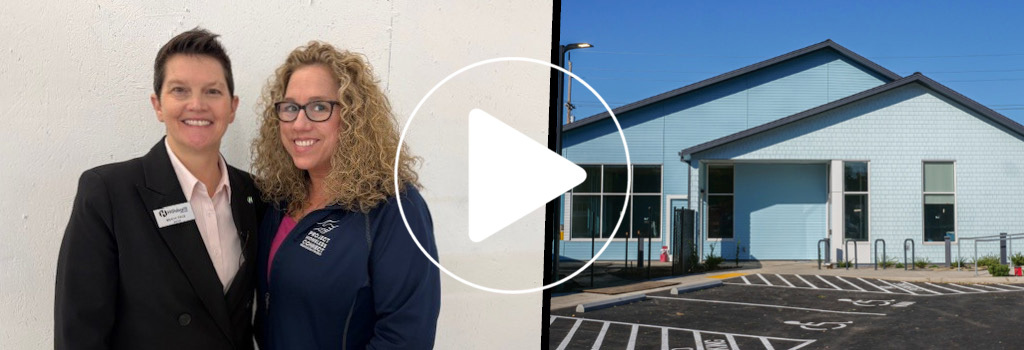 Community Conversations Features Hillsboro ShelterKim Marshall of Project Homeless Connect (PHC) Community Conversations Features Hillsboro ShelterKim Marshall of Project Homeless Connect (PHC)Shares Details & Updates With Hillsboro Mayor Beach Pace Kim Marshall of Project Homeless Connect Washington County joins Hillsboro Mayor Beach Pace to share details & updates on the nonprofit’s work to manage 24/7 operations at the recently opened Hillsboro Shelter and to help eliminate homelessness in Hillsboro.The conversation highlights how the shelter serves community members experiencing houselessness with support from community partners, including: Sequoia Mental Health Services to provide onsite mental health care4D Recovery, which offers behavioral health supportOregon Department of Motor Vehicles to facilitate acquiring identificationConnections to long-term housing support through Metro’s Supportive Housing ServicesThe City of Hillsboro and Washington County worked together to build & open the 75-bed, pet-friendly facility. The Hillsboro Shelter is possible thanks to funding and use of the property provided by City of Hillsboro, funding through Washington County’s allocation of Metro’s Supportive Housing Services Measure, and additional state and federal support.Watch Community Conversations   How You Can Support Community Members How You Can Support Community Members Experiencing HouselessnessHelp support community members experiencing homelessness by donating:Warm & waterproof clothing, jackets, and hatsNew undergarments, socks, hand & feet warmersHygiene items: Deodorant, shampoo & conditioner, hand sanitizer, body lotion, feminine products, toothpaste, etc.Fresh, frozen, and shelf-stable foodPlease contact a local service provider to see accepted items and coordinate drop-offs.You can also visit each organization’s website to make a monetary donation or learn how to volunteer.Get Involved 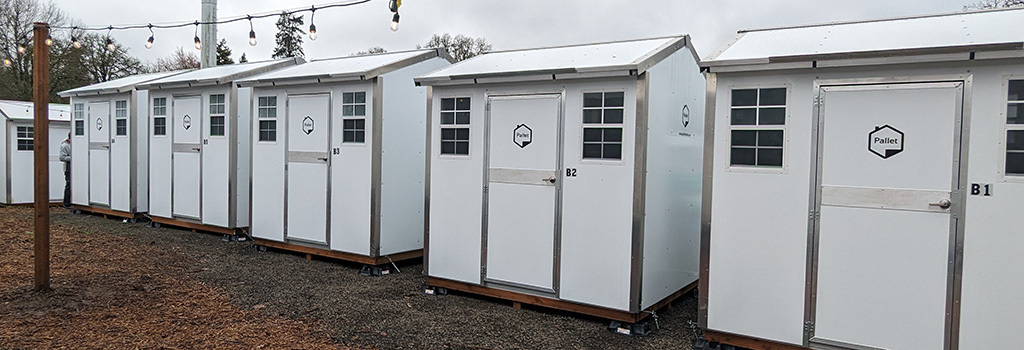 Washington County to Open Washington County to OpenCentral County Safe Rest Village in AlohaWashington County’s Department of Housing Services is engaging the community ahead of opening a new safe rest pod village at 3390 SW 209th Avenue in Aloha later this spring.The location will provide 60 pallet shelters with meals, restrooms, and showers, as well as housing support and case management services. The pod village, which will help meet urgent & essential shelter needs, will be operated by Open Door HousingWorks with 24/7 staffing.While the City of Hillsboro is not collaborating on this project, it may be of interest to Hillsboro neighbors and business owners due to its proximity.To learn more and ask questions, please visit the project webpage, email Washington County Housing Services, or attend Washington County’s next Neighborhood Meeting on April 8 at Tamarack Elementary School. 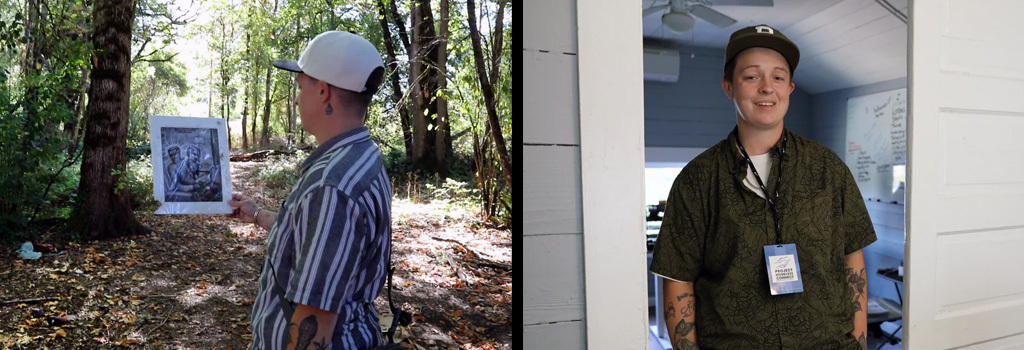 Amanda, Project Homeless Connect Outreach ManagerMetro News Article Highlights Street Outreach TeamProject Homeless Connect’s Street Outreach Team is making a positive impact in Hillsboro with the help of Metro Supportive Housing Services funding. The foundation of the Outreach Team’s approach is building authentic relationships and trust. When they encounter people living outside, they offer snacks, water, hygiene supplies, and whatever support they can to connect folks with resources. Sometimes their job is just to listen compassionately.“I love my job — I love seeing the success stories,” reflected Amanda, PHC Outreach Manager. “I’ve gotten to see so many people that were unsheltered, and now they’re housed, doing great, and clean and sober, and it’s really rewarding.”Read Metro’s News Article Amanda, Project Homeless Connect Outreach ManagerMetro News Article Highlights Street Outreach TeamProject Homeless Connect’s Street Outreach Team is making a positive impact in Hillsboro with the help of Metro Supportive Housing Services funding. The foundation of the Outreach Team’s approach is building authentic relationships and trust. When they encounter people living outside, they offer snacks, water, hygiene supplies, and whatever support they can to connect folks with resources. Sometimes their job is just to listen compassionately.“I love my job — I love seeing the success stories,” reflected Amanda, PHC Outreach Manager. “I’ve gotten to see so many people that were unsheltered, and now they’re housed, doing great, and clean and sober, and it’s really rewarding.”Read Metro’s News Article Oregon Youth Find Housing Oregon Youth Find HousingThrough Direct Cash Assistance ProgramWith the goal of empowering youth to invest in their own well-being, Oregon’s Youth Experiencing Homelessness Program (YEHP) provided 120 young adults experiencing homelessness with $1,000 a month in direct cash assistance, case management, and a one-time enrichment fund of $3,000. After a two year trial, 94% of the participants reported that they were housed and many reported improved financial literacy skills.One participant, Gabrielle, utilized the support to leave an unhealthy partnership, secure housing for herself and her daughter, and start pursuing school and homeownership.With these overwhelmingly positive results, the program has been expanded and a second cohort is now underway.Read The Oregonian article for an overview of the pilot program, listen to the OPB segment, or read Gabrielle’s story to learn more. Read The Oregonian Article  2025 Point in Time Count: 2025 Point in Time Count:Statewide & Washington County ResultsPoint in Time (PIT) Counts collect data from people experiencing homelessness on a particular day of the year to provide a snapshot of homelessness trends. The federal government requires regional Continuums of Care to complete a count of people in shelters and transitional housing every year annually with additional unsheltered counts completed every other year.It is important to note that PIT Counts are not a fully accurate representation and often overlook people who are doubled up in housing, in and out of homelessness, and communities of color.Statewide ResultsStatewide results for the 2025 PIT Count recorded:27,119 people from 23,330 households were experiencing homelessness39.1% were sheltered and 60.9% were unshelteredSheltered & unsheltered homelessness increased by 34.9% since the 2023 PIT Count — the increase also reflects improved counting strategies and changes in methodologySheltered homelessness grew 49.3% since 2023 as a result of a large-scale, statewide investment in shelter infrastructure that added 3,902 beds21,122 K-12 students — 4% of all students — were experiencing some form of homelessness as reported by school districtsLike previous years, community members of color (especially Black and Indigenous community members), members of the LGBTQIA+ community, and people with disabilities were more likely to experience homelessnessOregon has one of the highest rates of cost-burdened renters in the nation, with 80% of renters with extremely low incomes paying 50% or more of their income in rentFor more details and results, read the 2025 Oregon Statewide Homelessness Estimates provided by Portland State University’s Homelessness Research & Action Collaborative and Oregon and Housing Community Services. Read the Statewide ReportWashington County ResultsThe 2025 PIT Count in Washington County recorded:An increase of 167 individuals experiencing homelessness as compared to 2023Since 2023, increased resources for homeless services resulted in positive impacts, including:A 30% increase in the number of people who were sheltered65% of people counted in 2023 have been housed through Washington County’s housing programs or otherwise had a positive resolution to homelessnessNew households continue to experience homelessness at rates faster than services and resources can accommodate. This increase reflects broader economic factors like cost of living and unemploymentRead the Point in Time Count: 2025 Count and Context provided by Washington County’s Department of Housing Services for more details and results. Read the Washington County Report  Find Shelter or ResourcesFor shelter, housing, and homeless services, contact the Community Connect homeless response system at 503-640-3263 or CommunityConnect@CAOWash.org.Visit Washington County’s Homeless Resources webpage.Visit the City of Hillsboro’s Community Resources webpage to find food pantries, state benefits, rent assistance, affordable housing, and more.View our interactive public camping map to find day centers & areas where overnight camping may be allowed in Hillsboro. Find Shelter or ResourcesFor shelter, housing, and homeless services, contact the Community Connect homeless response system at 503-640-3263 or CommunityConnect@CAOWash.org.Visit Washington County’s Homeless Resources webpage.Visit the City of Hillsboro’s Community Resources webpage to find food pantries, state benefits, rent assistance, affordable housing, and more.View our interactive public camping map to find day centers & areas where overnight camping may be allowed in Hillsboro. |
| Stay Connected with City of Hillsboro, Oregon: |
November 5, 2025 The Oregonian Article, “WHO IS HOMELESS IN PORTLAND AREA?“
Most people who are homeless in the tri-county area are male (59%) and nearly half of people are between 35 and 54 years old. The majority of people included in the count identified as white (57%). However, people of color are disproportionately homeless as compared to their numbers in the community.
People who had experienced domestic violence and those with serious mental illness, physical disabilities or substance use were also overrepresented. And nearly half — 48% of people counted — are chronically homeless, meaning they have at least one disability and have been without stable indoor shelter for at least 12 months of the last three years.
Known as the point-in-time count, the federally mandated census takes place every other year and is focused on creating a snapshot of who is homeless on one night in January. Since 2007, the survey has been required by the federal government in exchange for federal homeless services funding for cities, counties or other geographic regions organized into Continuums of Care. Typically, the survey has provided the only way for different regions of the country to be fairly compared to each other. That isn’t true so far this year.
In early 2025, the U.S. Department of Housing and Human Services changed the deadline for when the survey data needed to be submitted and directed local governments not to report gender data. Between the subsequent firing of thousands of federal employees and the current government shutdown, national data on who is homeless in America in 2025 is not yet available. The funding secured by completing the survey work is also at risk under a proposed Trump administration policy change that could sharply limit how much could be used for housing.
But conducting the survey was still required. Researchers at Portland State University and at Multnomah, Washington and Clackamas counties led the local street count survey and carefully combined it with existing data to get as accurate a count as possible of who was homeless on the night of Jan. 22, 2025.
The total number of people found to be homeless in the tri-county area on that night was 12,034, with the vast majority living in Multnomah County. This is likely an undercount, which is a known problem with the point-in-time counts. People can decline to participate in the street count survey, people living doubled up with family and friends aren’t counted and those staying in shelters that aren’t publicly funded can opt out.
 Michelle, 45, tossed her dog’s toys into the pup’s stroller as she prepared her stuff for a move ahead of a planned sweep of the city block where she’d been camping. Michelle is from Vancouver and has lived in Portland for years.
More granular data from Multnomah County, known as a by name list, shows 14,361 people were homeless in January in that county alone. Washington and Clackamas counties do not have publicly facing by name lists.
Still, the point-in-time count includes several qualitative questions about people’s experiences with homelessness and their personal details that help paint a more vivid picture of who is homeless in the tri-county area.
Here are some key facts from the 2025 point-in-time count data:
GENERAL
› 20% sleep unsheltered
› 59% are men or boys
› 2,066 people were experiencing homelessness due to domestic or sexual violence
› 771 people were veterans (up 36% from 2023)
› 25 to 44-year-olds, most of whom would be considered Millennials, were the largest age group represented in the count
› 45 to 64-year-olds, most of whom would be considered Gen X, made up the second largest age group
RACE
› 3% were Native Hawaiian or Pacific Islander (three times the percentage of all Oregonians in this category)
› 6% were Indigenous (six times the percentage of all Oregonians who are Indigenous)
› 17% were Black (five percentage points higher than the portion of all Oregonians who are Black)
› Other racial groups were either underrepresented or more closely aligned with their portions of Oregon’s overall population
STREET SURVEY RESPONSES
(Less than 2,000 people answered each question.)
› 73% had last been housed in the tricounty area (1,785 people answered the question)
› 10% were last housed in either Clark County or elsewhere in Oregon (1,785 people answered the question)
› 42% said they had a physical disability (1,703 answered the question)
› 81% were heterosexual and 7% were bisexual (1,555 answered the question)
New data offers insights into homeless population
Pinpointing where people are from is not as simple as it sounds.
Lillian Mongeau Hughes The Oregonian/OregonLive
More than 14,000 people are homeless in Multnomah County, according to the county’s best available estimate. The count is shocking. And it has prompted many readers to email The Oregonian/ OregonLive with some version of the question: Where are they all from? And why have they come here?
Spoiler alert: As best as anyone can tell, the large majority are from Oregon.
The narrative that unhoused people come to Oregon for services is pervasive, as demonstrated in comments submitted to The Oregonian/OregonLive in its June call-out for reader questions about homelessness. One reader, who asked that their name not be published, wrote that the goal of ending homelessness would be impossible “if we are going to end up with the nation’s homeless because other states and areas don’t have programs.”
Portland Mayor Keith Wilson has also highlighted the idea that many people who are homeless in Portland are not from here. His team has increased their efforts at the “reunification” of homeless people in Portland with family living elsewhere and pledged to give people money to “get back to their loved ones.”
But two separate surveys conducted in the past year suggest nearly 80% of unhoused people in the Portland area lived in Oregon or Clark County before they lost housing or have lived here for years.
The answer to the question about where people are from is not as simple as it sounds. This reporter, for example, is originally from Massachusetts. However, she hasn’t lived there in more than 20 years, has called three other states home for short periods and is currently a homeowner in Oregon. Is she counted as being from Oregon? Would she be owed public services from Multnomah County were she in need?
Inside: Some key facts gleaned from the 2025 point-in-time count data. A2
Because the question is so vague, data collected by counties, which provide the bulk of homeless services in the Portland area, does not include information on where homeless people are from.
The federally required biennial point-in-time count street survey is the only data collection tool that regularly and specifically asks where people are from.
The 2025 point-in-time count report for the Portland tri-county area was released Tuesday.
The street survey is just one part of the point-in-time count effort, but it’s the one that asks people living without shelter who agree to be interviewed where they were last housed. Of the 1,785 people who answered the question, 73% said they had lived in the tri-county area before becoming homeless.
Another 4% were last housed in Clark County, just over the border in Washington. And 6% were last housed elsewhere in Oregon.
That means just 17% of people who answered the question were last housed outside of the state or region. That’s the same portion who answered the question that way in 2023.
Everyone who was not from the tricounty area was also asked to select from a list of reasons they had come to Oregon. The most frequently chosen answer was that they had family or friends living here (34%), followed by “other” (23%), homeless services (18%) and employment (12%). It should be noted that some answering these questions had housing when they first arrived in the Portland area and only became homeless later.
A separate survey of 429 people who have experienced homelessness in the Portland area also tried to get at the question of where people were from.
The survey was conducted in the summer and fall of 2024 by several homeless services nonprofits, including the Welcome Home Coalition and Sisters of the Road, with advisory support from several Portland State University professors.
Surveyors for that report asked: “How long have you lived in the Portland Metro area?”
A slight majority (52%) said they had lived here 10 or more years. Another 28% said they’d lived here three to nine years. About 9% said they’ve been in the area for less than a year.
While the surveys show that a majority of the people who are homeless in the Portland area were living in the area before they became homeless, they do also show that a small portion — 4% of the total number of unsheltered homeless people who were surveyed — say they came from outside the region and were attracted to the area for its homeless services.
Marisa Zapata, director of Portland State University’s Homelessness Research and Action Collaborative, oversaw the January 2025 point-in-time count and was a lead author on the report. She said that when considering the importance of the question about where people were last housed, she asked: “What does this data point help us solve or understand?” Her answer: Not much.
Given that only a small number of people moved to Portland for homeless services, Zapata said a policy specifically focused on those people is “not going to move the needle on homelessness. What moves the needle is addressing the needs of 70% of the population.”
And, she said, a person’s origins might have nothing to do with the help they need.
“I think that people are thinking they should be sent home,” Zapata said. “But if they moved here for friends and family, that’s not really true. If they moved here because of sexual orientation or gender identity, is that who we want to be? Do we want to be the people who are sending them back someplace dangerous? And some people might end up here … because there’s not enough health care (where they are from). And again, are we going to send people back who need health care?”
Nov 25, 2024
Faith Café
Posted by | Catholic Charities Communications
What an organized and compassionate group can achieve
More than two decades ago, a group of Catholic parishes in Portland’s western suburbs sent delegates to a retreat. The topic? Nothing less than how to further social justice.
Out of that big idea emerged four areas of focus: voter education, promoting peace, affordable housing and hunger.
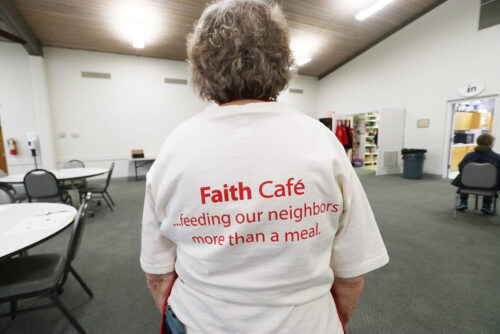
The final category gave rise to a lasting project. Faith Café, an ecumenical weekly meal and social time for low-income people, has endured for almost 20 years and steadily has convened a wide array of guests and volunteers who treasure it.
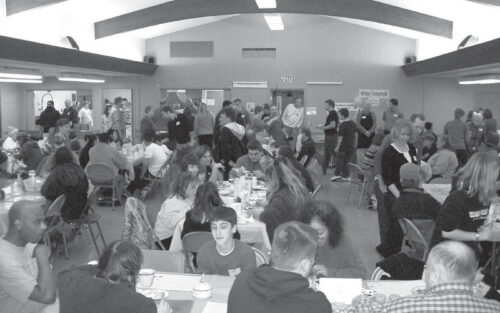
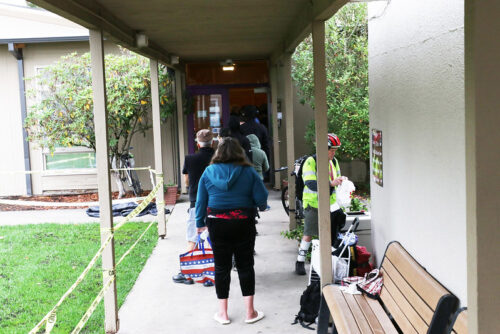
Meals are served every Sunday afternoon at Bethel United Church of Christ in Beaverton, starting at 4:15. A line begins to form under a covered walkway at about 1:30. Volunteers have rarely missed a Sunday, even during the pandemic and nasty weather.
“We are feeding our neighbors more than a meal,” says Sarah DiCarlo, a west-side Catholic who volunteers at Faith Café and serves on the board. What DiCarlo means is that friendships develop as part of a deep commitment to recognizing human dignity.
“We tell volunteers to talk to people and let them know they are valuable,” says Lori Smith, a board member and volunteer from the Church of Jesus Christ of Latter-day Saints. “I think they get dumped on all the time. If someone smiles and shows them that we care and that they matter — that means more than the food sometimes.”
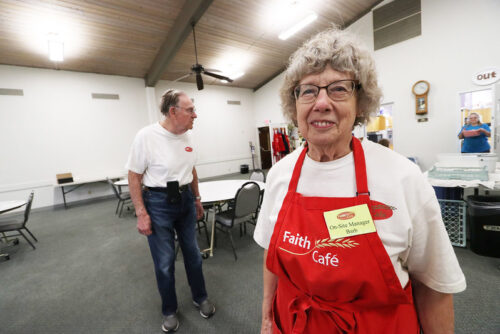
The need for food and human companionship has only grown over two decades, says Barb Upson, the St. Juan Diego parishioner who was in on the beginning of Faith Café and has remained as the project’s spark plug.
Upson gets credit for keeping Faith Café purring through hard work, innovation and partnerships. She does the small but necessary things.
“Barb is so humble,” says Catherine Moore, a St. Juan Diego parishioner and current president of the board. “This program would not be running without her.”
The start of Faith Café came at a remarkable time at a new parish, says Father John Kerns, founding pastor of St. Juan Diego. He convened that social action retreat in 2004.
“There were no buildings at all. Not even a church yet,” says Father Kerns, now pastor of Our Lady of the Lake Parish in Lake Oswego. “But parishioners had compassion, a zeal for service and organizational skills.”
The team identified First United Methodist Church in Beaverton, which did have buildings as well as enthusiasm for serving meals. What the Methodists lacked was people. For that, the Catholics came through. In addition, St. Juan Diego committed 5% of all its income to those living in poverty. Part of that money helped sustain Faith Café.
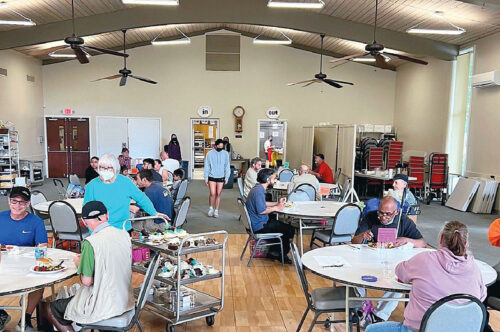
For the first meal, only one person showed up. But word soon spread of the warm atmosphere.
“The food is so good and the people so kind that I come back every week,” a 94-year-old diner named Norm told the Catholic Sentinel newspaper in 2010. “The volunteers who serve the meals know that I don’t like dressing on my salad, and they know which cookies are my favorite. I have two special women that I call my angels. They like to listen to my stories and treat me like a king.”
Now, an average 100 guests come weekly to Faith Cafe. In 2012, the location moved to Bethel United Church of Christ.
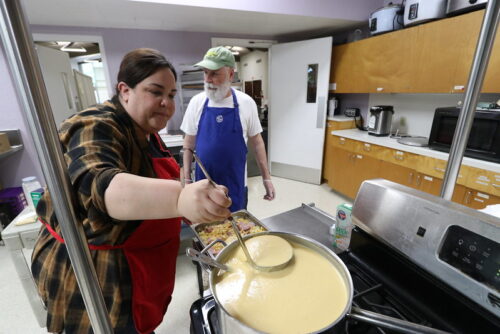
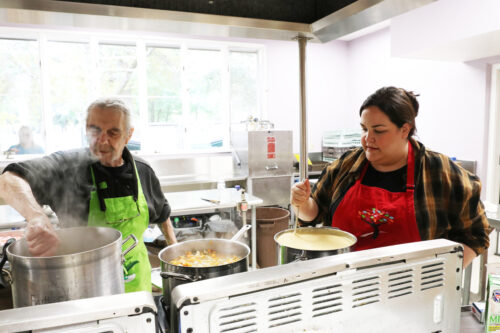
On one October Sunday, Bethel volunteers did the cooking and serving.
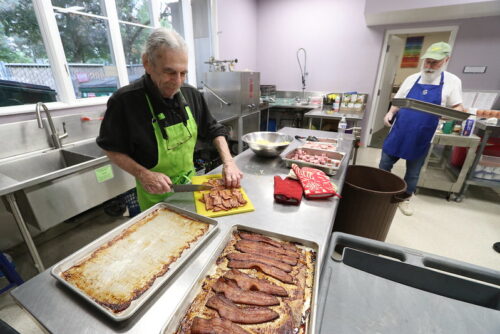
Steam rose from two massive pots being stirred by David Syrop and Amanda Sanchez. The smell of baked ham caressed the nose as Leon Taylor opened the oven to check. The Bethel team has been working together for years.
The ecumenical venture includes not only Catholics (including the Sisters of St. Mary of Oregon) and members of the United Church of Christ, but a Filipino cultural society. Each organization brings cooks and servers on their day. The various wards of the Church of Jesus Christ of Latter-day Saints prepare and serve a monthly meal on Thursdays.
“We have different churches, but we are so much more alike than different,” says Moore.
Di Carlo chimes in: “We all work so well together.”
The same guests and volunteers have been coming for years.
“The regulars who come are so comfortable here,” says Di Carlo. “They know they are welcome, and we really care about them.”
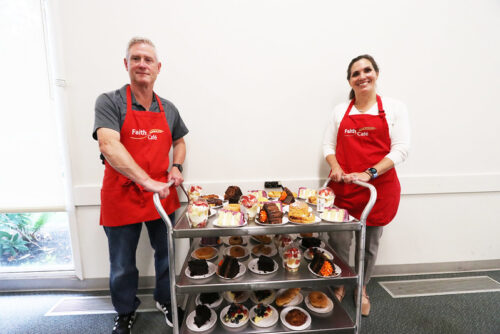
Anne-Marie Kiriazis, another board member, recalls the diner who found a job, did well, then came back to volunteer.
Another longtime guest, a quiet gentle man who often helps, may be invited into leadership. “He brings a different perspective of someone who has been on the streets before,” says Moore. “I think he enjoys it here. We treat everybody with respect.”
For their part, volunteers are a mix of retired and working people, with even a few young students.
One married Catholic couple volunteer faithfully. Jill and Jeff Ralston moved to the Vancouver, Washington area three years ago, but have remained active at St. Juan Diego and still volunteer at Faith Café.
“I love it,” says Jeff. “It’s about helping people.”
“We establish relationships with our guests, which is so rewarding,” says Jill. “The majority of them we know by name. And if they don’t show up, we reach out, concerned for them and how they are doing in the community. I think that just takes it to another level.”
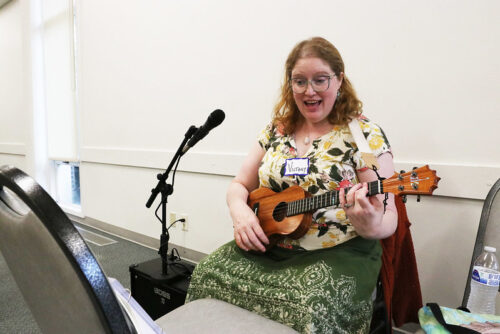
One never knows what diners may want to talk about. One nervous father-to-be inquired about how to raise children. The volunteers’ hearts melted and told him: “Love them and have a lot of patience.”
Upson says that volunteers learn a lot from speaking with guests. “They might be talking to someone who was president of a company,” she explains. “They are surprised and then they realize that that could be any one of us.”
There are no food lines here.
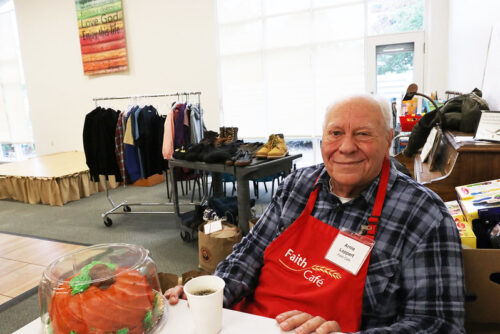
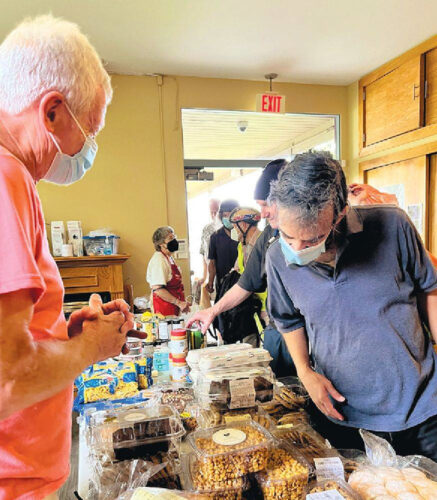
After coming inside, guests walk past a giveaway table laden with food or toiletries. Then they swing past Arnie’s Boutique, a set of tables and racks overseen by longtime volunteer Arnie Leppert. There, they enjoy a chat with the amiable Arnie before selecting shoes, clothes, blankets or other necessities for life in the rough.
Then, as at a restaurant, they take a seat at a table with placemats decorated whimsically for the day by none other than Upson. A volunteer brings a steaming plate of food and places it on the mat.
Board member Lindi Krantz says table conversations between volunteers and guests often lead to identifying other needs that volunteers can address.

Hours before guests arrive, the volunteer cooks get going. The menu and supplies have been set in place by Faith Café’s only paid staffer. The kitchen rings with utensils and aromas that grab the hungry soul by the lapels.
If guests are leery about eating in a communal setting, they can get a meal in a box and take it to their tent, trailer or apartment. But most eat in, drawn by the communal love.
When first-time diners arrive, they often look for the cafeteria line. Volunteers come and tell them, “Have a seat. Relax. We serve you.”
Tension melts from guests’ faces as they are greeted and then tuck in to tasty dinners made of supplies from the Oregon Food Bank and the LDS church’s Deseret Industries.
After diners eat, they can get another meal in a box to take home.
About 10% of those who eat are homeless. The rest live in RVs or low-rent apartments.
One day, Upson was riding the MAX train. On board, she saw a regular Faith Café diner and struck up a fun conversation. As she got off the train, the man said quietly, “Thank you for acknowledging me in public.”
Keen organization and a reasonable workload for volunteers seem to be two of the reasons Faith Cafe has lasted. Teams need to come only once every seven weeks. There are about 150 volunteers total.
That number is impressive, says Moore, given that it’s harder to find volunteers to serve homeless people than, for example, to help animals or children.
Matt Cato, an early volunteer at Faith Café and former director of the Office of Life, Justice and Peace for the Archdiocese of Portland, says that what he likes most about the project is that volunteers “treat each person as their own person … not an amorphous group of people classified as hungry.” He moved out of his comfort zone and became a greeter.

“I loved it,” says Cato. “It is the ‘encounter’ that Pope Francis keeps charging us to do. “So how do I see the role of Faith Cafe in the world? As a welcome opportunity for a few hours of encounter, conversation, food, and camaraderie.”
On one September Sunday, a man who had just eaten at Faith Café came to speak with volunteers. “He was so gracious and grateful,” recalls Smith. “He said ‘I just can’t thank you enough. We had a new baby and have diaper and formula expenses, and you have no idea how much this food helps us.’”
Upson wants Faith Café to inspire other social action.
“I would hope that people would see that a group could get together and could really help to solve a problem,” she says. “That was our aim to begin with. I can see other Catholic parishes looking at us and picking another problem that needed some help and using this model to help solve the problem.”